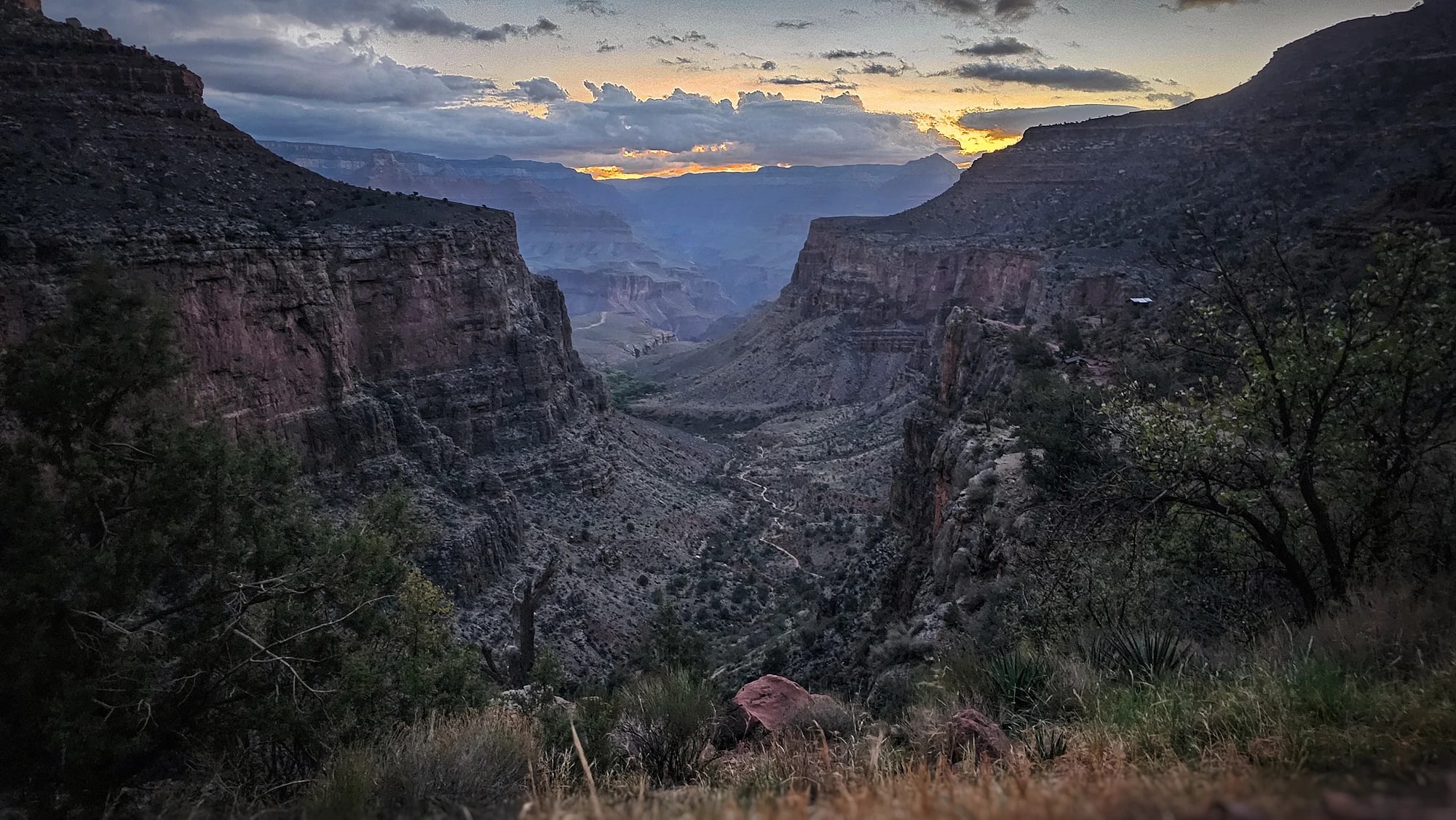
This isn’t a guidebook. It’s the stuff I wish someone had drilled into me before four grown men stood in a parking lot for way too long trying to pick a hotel.
If you read The Canyon Kept Saying No, you know the story. We planned a multi-night Grand Canyon backpacking trip, and it shrank three separate times before we’d finished hiking out.
The Planning Wasn’t Wasted
It’s tempting to look at a trip that changed this much and decide planning is pointless. It’s the opposite.
We had permits. We had food for more nights than we used. We had a rental car and a rough idea of what was around Flagstaff, Sedona, and Phoenix. When the canyon said no, we weren’t starting from zero. We were choosing from options we’d already thought about.
Planning doesn’t guarantee the trip you planned. It gives you the raw material for the trip you actually get.
Treat Conflicting Information as Information
In the days before we hiked in, the backcountry office gave us opposite answers about whether the trail to the river would open. That’s frustrating, but it also tells you something: nobody knows yet.
When that happens, make the decision that’s cheapest to undo. For us, that was adding a second night at Havasupai Gardens. If the river trail opened, we were set. If it didn’t, we’d cancel. It didn’t, and we did. We lost a little hope and nothing else.
Keep your options open where it’s cheap to do so. Don’t bet the whole trip on the optimistic answer.
Your Body Gets a Vote
Three times on this trip, a body made the decision for us.
One of our group felt sick half a mile down and turned back. Our legs were so cooked at the bottom that the river day we’d been hoping for would have been a mistake. And in Sedona, between an illness and a sprained ankle, the hiking plan just evaporated.
None of those were failures. They were the trip telling us what it could actually handle. The hard part isn’t recognizing it. The hard part is accepting it without feeling like you’ve lost something. Turning back half a mile in takes more guts than pushing on.


Adapting Is Not the Same as Winging It
At Havasupai Gardens, we met day hikers who seemed badly unprepared for what they’d taken on. That’s worth sitting with, because “be flexible” is only good advice if you’ve done the work first.
Adapting means changing a plan when reality changes. Winging it means never having a plan. In the Grand Canyon, in triple-digit heat with almost no shade, those two things end up in very different places.
Be flexible. Be flexible from a position of preparation.
Somebody Has to Decide
This is the one I didn’t see coming, and I think it’s the most useful thing I brought home.
After the hike, we had no hotel. We went back and forth between Flagstaff and Sedona for far longer than the decision deserved. Nobody was being difficult. That was the problem. Four easygoing people, everyone happy to go along, nobody willing to just call it.
Small groups can decide over a quick look at each other. Once you get past two or three people, a group tends to waffle. Every option sounds fine, nobody wants to override anyone, and the conversation loops until someone gets hungry.
Here’s the thing, though. You can’t fix that by appointing someone. Handing a person the title of “decider” doesn’t make them one. Some people just are that person, and the trick is finding them.
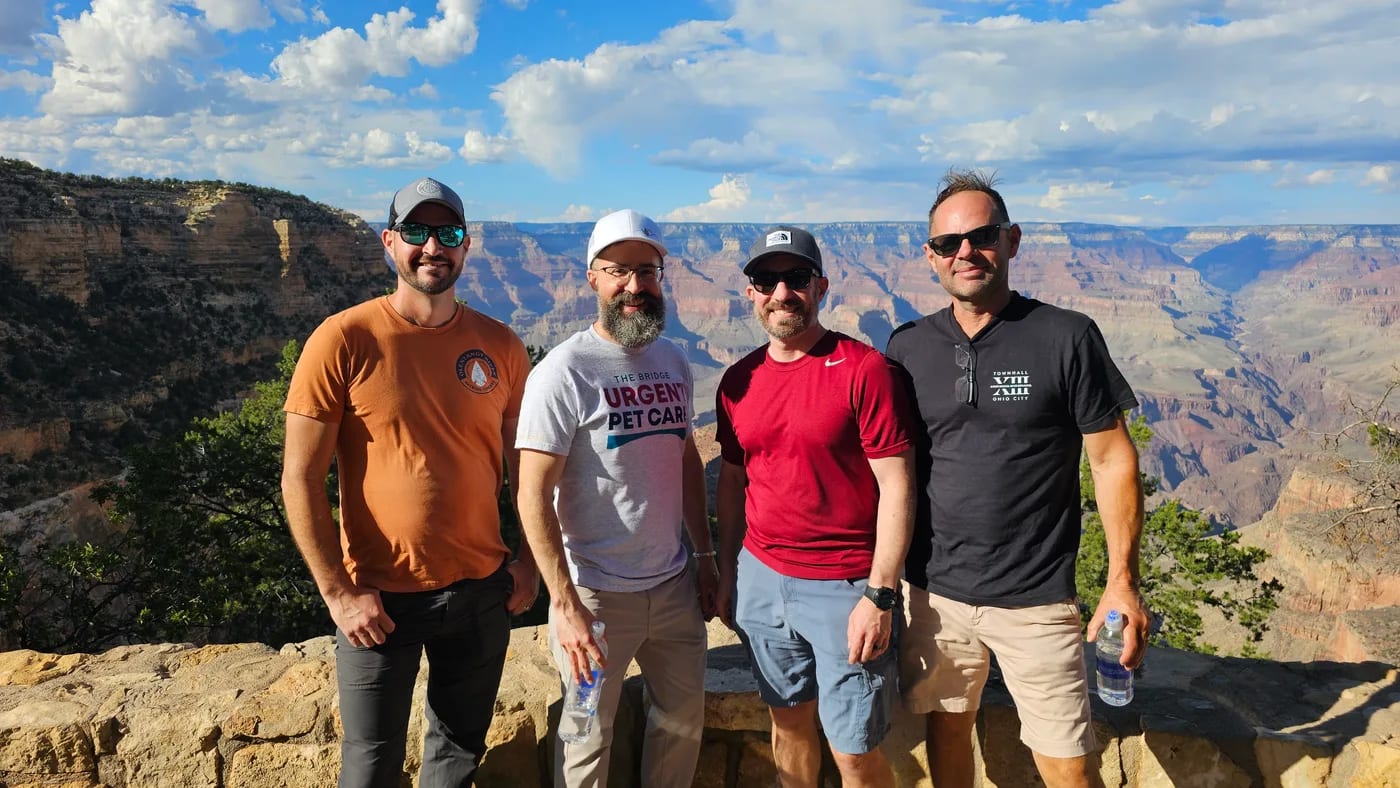
On this trip, it was Dan. The Grand Canyon was his idea. He got the permit. He picked the dates. The rest of us followed, happily, because somebody had made the call and it was a good one. That’s why the trip happened at all.
Once the canyon part was over, that clear direction was gone, and you could feel the difference immediately. Suddenly we were four guys in a parking lot with a phone full of hotel options and nobody steering.
Without a decision-maker, no decisions get made. The conversation just circles. Every group needs at least one person who’s comfortable saying “we’re doing this,” and a group that’s willing to let them.
If you’re putting together a trip, look for that person first. If it’s you, own it. If it isn’t, find them, and then let them lead. It’s the same thing that makes a group trip work whether there are four of you or fourteen.

The hardest decision of the trip, and nobody wanted to make it.
What I’d Do Differently
- Travel with a decision-maker. Especially in groups of four or more. You can’t assign one. You find the person who naturally makes the call, and you let them.
- Have a backup plan for the days after, not just the main event. Our time in Flagstaff, Sedona, and Phoenix was fun, but it would have been smoother with a hotel option or two already in mind.
- Make the reversible bet. When information conflicts, book the thing you can cancel.
- Build slack into your body’s schedule. If you’re doing something as hard as the canyon, the day after may not be a hiking day, no matter what the itinerary says.
- Check the small logistics, not just the big ones. The park shuttle stopped running for the season the day before we needed it, which is how four hikers ended up in a cab at five in the morning. The permit was the part everyone worried about. The ride to the trailhead was the part nobody checked.
Let It Go
We planned this trip about as hard as you can plan anything. Then the canyon rewrote it three times.
What made it a good trip wasn’t the plan holding up. It was the four of us being willing to let the plan go, and finding something worth doing in whatever was left.
Plan like hell. Then let it go.


Activities via Viator. Booking supports Schwan Travels.
Jennifer plans travel professionally over at Schwan Travels. If you want a hand with a trip of your own, that’s where to find her.